WHAT IS AUTOMATION?
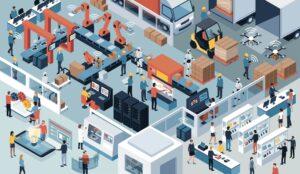
Automation is the application of technology to monitor and control the production and delivery of products and services with minimal human intervention. The use of automation technology ranges from the cell phone and computers we use every day to do our job to self-driven vehicles, heat-treating ovens, video games you play and warehousing robots.
Automation technology incorporates all procedures and operations that enable factories and systems to run automatically. Automation is utilized to minimize labour, it is the use of technology to perform tasks to reduce human assistance. These include machines, industrial robots, CNC machines, machines of custom design, motion controllers, equipment and other devices.
Automation technology crosses all operations within the industry ranging from integration, installation, management and marketing. Industrial automation uses computerized control systems and robots. Those machines and robots are used in the manufacturing process. For example, automated conveyor systems move parts and objects through the various manufacturing stages.
TYPES OF AUTOMATION TECHNOLOGY.
There are four types of automation systems in industrial automation technologies:
-
FIXED AUTOMATION.
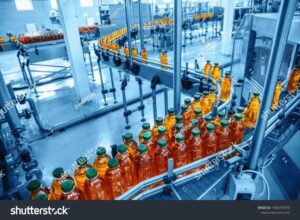
Fixed automation systems, sometimes referred to as hard automation, were created to carry out monotonous operations that do not vary from one product to another. Fixed automation is the best fit for producing a single type of product. Hard automation systems have internal programming, which implies that it is their hardware that controls them. This makes it difficult to apply fixed automation systems for different types of products or to adjust product changes. Fixed automation systems are commonly used for specific tasks and are built for one purpose, discrete mass-production steps in mass-scale production lines. An automated conveyor belt is an example of fixed automation, the machine operates and moves objects with minimal effort.
-
FLEXIBLE AUTOMATION.
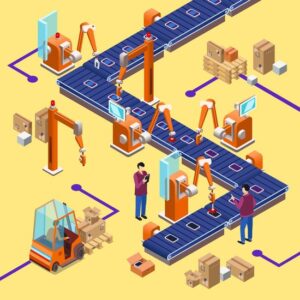
Flexible automation, usually referred to as “soft automation, is frequently used in preset processes involving many items. In flexible automation, machines are given instructions from a computer system and it is capable of carrying out a diversity of tasks based on the computer program. Flexible automation only requires software changes, which enables it to easily accommodate changes to product designs. For instance, the manufacturing of paint and the processing of food are two such industries.
-
PROGRAMMABLE AUTOMATION.
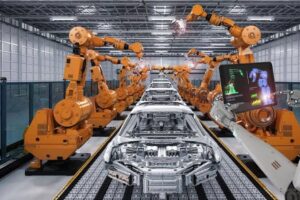
In programmable automation, computer programs issue commands that control programmable automation systems. This particular kind of automation can be reprogrammed to carry out several variations of the same task. In batch manufacturing, programmable automation is frequently employed. The machine is programmed to complete a certain task, and it can then be programmed once again to accommodate changes needed for a new batch. Manufacturing facilities that employ the same procedures and instruments to create items of a similar nature use it. An example of programmable automation is paper and steel rolling mills and industrial robots.
-
INTEGRATED AUTOMATION.
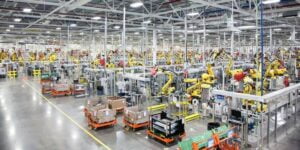
Integrated automation systems are used in automated manufacturing procedures where no human involvement is necessary. In addition to connecting the various pieces of production equipment separately, integrated automation machines carry out the instructions or commands issued by computer software system controls. Manufacturing processes that use batches can also use integrated automation. Manufacturing with Lights-Out is an example of integrated automation.
WHAT ARE THE BENEFITS OF AUTOMATION TECHNOLOGY?
The following are the benefits of automation technology :
-
HIGH PRODUCTION RATE.
One of the benefits of automated machines is an increased productivity rate. Automation is a major part of the manufacturing industry and with the use of automation, jobs are carried out independently and more effectively by machines throughout the entire production chain.
-
COST SAVINGS.
Automation technology offers several benefits and the use of automation helps to lower operating costs, by reducing overall labour costs, such as wages and benefits. Cutting expenses makes it possible for companies to create their products more quickly and also increase the quality of a product.
-
REDUCED ERRORS.
Automation technology helps to reduce and restrict the possibility of human error during the production process. And also, promoting high-quality products with the use of automated machines and technology.
-
INCREASED SAFETY
The use of robots and other types of automation technology systems in the industry has helped to keep employees out of dangerous situations and hazardous materials or equipment such as chemicals, heavy materials, sharp metals and equipment. And this has enhanced workplace safety for employees.
-
ACCURACY
The application of automation has helped in the collection of more accurate data. Automated data provides access to production information and empowers managers to decide on the manufacturing processes more effectively.
In conclusion, automation technology has played a vital role in the workforce and the usage of automation will keep growing as more marketers try to take advantage of its usefulness to increase productivity. Also, with the application of industrial automation, there is an increase in production rates, a reduction of human errors, and a high level of employee safety and companies can now produce higher-quality goods with effective usage of materials.