
Understanding the
Biometric System
Analyze the term “biometrics”; for two words; biology and metrics. Metrics often involve comparing datasets to find patterns and examine trends.
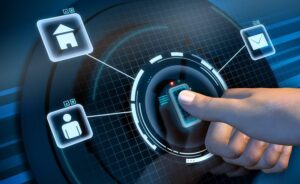
Biometrics does the same thing, comparing the biological record of “something a person has”; with “something I am” – a phrase often used by identity professionals when talking about “lock and key”; and a token-based approach to user identification and authentication in a modern password system.
Biometrics
Biometrics is the most appropriate method to reliably and quickly identify and authenticate people thanks to unique biological characteristics.
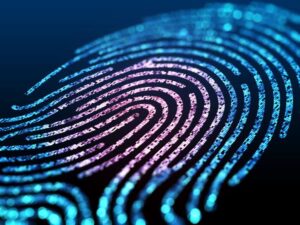
For example; Users who identify themselves to a computer or building by fingerprint or voice.
Biometric system
The biometric system is a technologically advanced system that uses personal data already stored in a database to identify an individual.
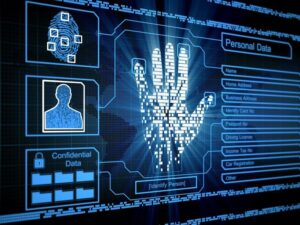
Each person has unique personal characteristics that are directly related to them and that help the biometric system to verify or identify the person.
How does the Biometrics system work?
The biometric system comprises a series of sensors to record the biometric data of the system users in a database with stored biometric templates.
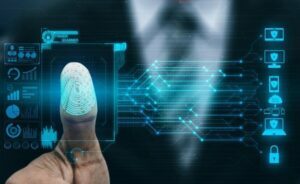
The biometric system works on the basis of the biometric data obtained from the person, from which a special algorithm selects the characteristics in order to create a biometric template.
The system determines a probabilistic match score indicating that the entity tested is the same entity from which the reference is stored.
Examples of Biometrics Systems
Multimodal biometrics combine multiple techniques to increase security and accuracy. These techniques include:
- Fingerprints.
- Face recognition.
- Iris and Retina.
- Palm.
- recognition based on DNA.
Types of Biometrics systems
The types of biometric systems fall into two main categories;
-
Physical Biometrics
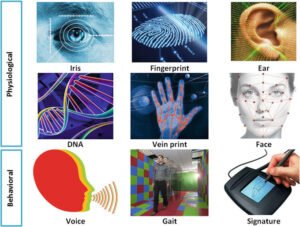
Physical biometrics deals with the shape, characteristics or dimensions of the human body.
Examples;
- Fingerprint – ridges on the finger.
- Hand Geometry – finger spacing, finger length, etc.
- Handprints – palm lines on the hand and the thickness or width of the hand.
- DNA – genetic sequence analysis.
- Blood – blood type.
- Face measurements – including; Geometry of ears, nose, size and shape of head, distance between eyes, hair color, etc.
- Iris and retina – color and shape of eyes.
-
Behavioral Biometrics
Behavioral Biometrics refers to the unique way in which an individual performs a specific behavior or pattern that has been identified in human behavior.
Examples:
- Walking style.
- Variation of Voice and Speech. gestures.
- recognition of written text, such as a signature.
- Shopping habits.
Where biometric data may be used.
Criminal Investigation:

A biometric system can be extremely useful in applications that require accurate biometric identification based on face in recorded video, latent fingerprints, or palmprints using automated biometric identification systems (ABIS) such as;
- Citizen card for citizens, residents, voter card.
- Business applications to identify consumers and customers.
- Border, travel and migration control for travelers, migrants and passenger identification.
- Military to identify enemy and ally.
Conclusion
Biometrics is growing fast, particularly in the field of identity documents. It’s use of biometrics has many benefits. The leading one is the level of security and accuracy that it guarantees. In contrast to passwords, badges, or documents, biometric data cannot be forgotten, exchanged, stolen, or forged.
In the sectors of banking, retails and mobile commerce, there is a high appetite for the benefit of biometrics.
Most importantly, awareness and acceptance have been boosted in the past seven years, as millions of smartphone users are unlocking their phones with a fingerprint or a Face ID.
Again, biometric systems are great wherever identification and authentication is critical.