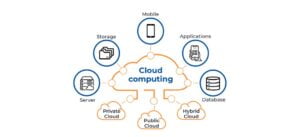
What is Cloud Computing?
Cloud Computing is on-demand availability of computer system resources, especially data storage (cloud storage), and computing power without direct active management by the user.

In simple layman’s understanding; Cloud computing means using remote servers to store and access data instead of relying on local hard drives and private data centres. It is the range of services delivered over the internet or “the cloud”.
These cloud services are hosted at a software vendor’s data centres and managed by the cloud service provider or onsite at a customer’s data centre.
Who can use Cloud Computing?

1:Organisations and companies:
Organisations of every type, size and industry are using the cloud for a wide variety of use cases such as data backup, disaster recovery, emails, virtual desktops, software development and testing, big data analytics, and customer-facing web applications.
Rather than investing heavily in databases, software and hardware, companies opt to access their compute power via the internet, or the cloud, and pay for it as they use it. These cloud services now include, but are not limited to servers, storage, databases, networking, software, analytics and business intelligence.
2:Customers:
Cloud Computing offers more agility, scale, and flexibility. Instead of spending money and resources on legacy IT systems, customers are able to focus on more strategic tasks without making a large upfront investment, they can quickly access the computing resources they need and pay only for what they use.
Layers of Cloud Computing
- Physical layer.
- Virtual layer.
- Control layer.
- Service orchestration layer.
- Service layer.
Examples of Cloud Computing Servers
- Amazon elastic computer cloud (EC2).
- IBM Smart cloud Enterprise.
- Microsoft.
- Google App Engine.
- Windows Azure services platform.
Types of Cloud Computing
1: Public cloud:
Public clouds are managed by third parties which provide cloud services over the internet to the public, these services are available as pay-as-you-go billing models. A public cloud is meant to serve multiple users, not a single customer.
2:Private Cloud:
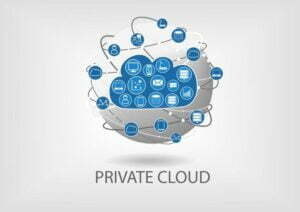
Private clouds are distributed systems that work on private infrastructure and provide the user with dynamic provisioning of computing resources. Private cloud has some restrictions to use which cost more than the public cloud. It provides the highest level of security and control and could be hosted at the organisation’s location or at the cloud provider’s data centres.
Examples of private cloud providers are;
1: HP Data centres
2: Ubuntu
3: Elastic-private Cloud.
4: Microsoft.
3: Hybrid Cloud:

As the name implies, a hybrid cloud is a combination of both public and private clouds. It gives both the public and private features of cloud scalability. It gives secure resources which has less cost and networking becomes complex because of private and public cloud.
Generally, hybrid cloud customers host their business-critical applications on their own servers for more security and control and store their secondary applications at the cloud provider’s location.
4: Multi Cloud:

Multicloud makes use of multiple cloud computing services from different providers which allows organisations to use the best suited services for their specific needs and avoid vendor lock-in. The main difference between hybrid cloud and multi cloud is the use of multiple cloud computing and storage devices in a single architecture.
Cloud Computing Services

Within the types of cloud computing, there are three main services namely;
1:System as a Service (SaaS):
System as a Service is a software delivery model in which the cloud provider hosts the cloud customer’s application at the cloud provider’s location. The customer accesses those applications over the internet. Rather than paying for and maintaining their own computing infrastructure, SaaS customers take advantage of subscription to the service on a pay-as-you-go basis.
2:Platform as a Service(PaaS):
PaaS gives customers the advantage of accessing the developer tools they need to build and manage mobile and web applications without investing in or maintaining the underlying infrastructure.
PaaS needs to have ready-to-use programming components such as Artificial Intelligence (AI), Chatbots, Blockchain and the Internet Of Things (IOT).
3: Infrastructure as a Service(IaaS):
With IaaS, companies control their own computing, networking, and storing components without having to manage them on-premises physically.
Conclusion
Cloud Computing is being visualised as the next generation of IT enterprise. Companies can harness the abundance of data to gain predictive insights into their business and ultimately drive better outcomes for their customers.