
INTRODUCTION
In today’s world, the need to integrate artificial intelligence (AI) with human intelligence has become increasingly crucial.
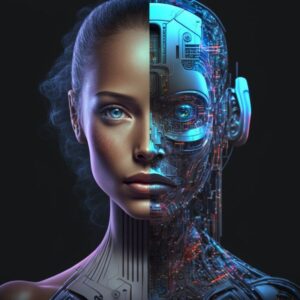
While AI technologies offer immense potential in automating tasks, analyzing vast amounts of data, and solving complex problems, it is essential to recognize that AI alone cannot replace the unique qualities and capabilities of human intelligence.
Reasons For The Integration Of AI With Human Intelligence
1. Complementary Nature Of Their Strengths
AI excels in processing large volumes of data, identifying patterns, and performing repetitive tasks with high accuracy and efficiency. On the other hand, human intelligence possesses qualities such as creativity, empathy, critical thinking, and complex decision-making abilities that are currently beyond the reach of AI systems.
2. Increased Productivity
This is achievable by combining AI with human intelligence, leveraging the strengths of both to achieve better outcomes. AI technologies can augment human capabilities, providing valuable insights, automating routine tasks, and freeing up human workers to focus on higher-level thinking, innovation, and problem-solving.
This collaboration can lead to increased productivity, improved decision-making, and enhanced creativity.
3. Curb The AI Ethical Concerns
Furthermore, integrating AI with human intelligence can address the ethical concerns associated with AI. AI algorithms are susceptible to biases, which can perpetuate inequalities and discrimination.
By involving human intelligence in the development and deployment of AI systems, we can ensure that ethical considerations are taken into account. Human judgment and oversight can help identify and rectify biases, ensuring that AI tools are fair, transparent, and beneficial for all individuals.
4. Improved Health And Security
In fields such as healthcare, finance, and cybersecurity, the integration of AI with human intelligence is particularly critical. AI technologies can assist medical professionals in diagnosing diseases, analyzing complex financial data, and detecting anomalies in security systems.
However, the final decisions and actions should be made by human experts who consider additional factors, such as patient preferences, ethical considerations, and contextual information that AI may not fully grasp.
5. Creation Of Employment Opportunities
As AI technologies advance, there is a growing demand for professionals who can understand, interpret, and apply AI-powered insights and tools.
This creates new avenues for employment and career growth, as individuals with a solid understanding of AI can work alongside AI systems to achieve optimal results.
CONCLUSION
Integrating AI with human intelligence is essential in today’s world. By combining the strengths of AI and human intelligence, we can harness the power of automation while preserving the unique qualities of human creativity, empathy, and critical thinking.
This integration not only leads to improved productivity and decision-making but also addresses ethical concerns and creates new opportunities for individuals in the workforce.
By embracing this integration, we can navigate the complex challenges of the modern world and unlock the full potential of AI while ensuring a human-centric and ethical approach.